

Why Black Friday works for a dealership
Shoppers walk into Thanksgiving week already expecting a deal, and a lot of them have time off to act on it. For the store, the timing lines up with the things December pressure is made of:
- Year-end targets. The last five weeks of the year decide annual volume, and many manufacturers run their own year-end events alongside it.
- Outgoing model-year inventory. Prior-year units still on the lot get harder to move every week after Thanksgiving.
- The household is home. Big purchases are family decisions, and this is a week when the family is in one place.
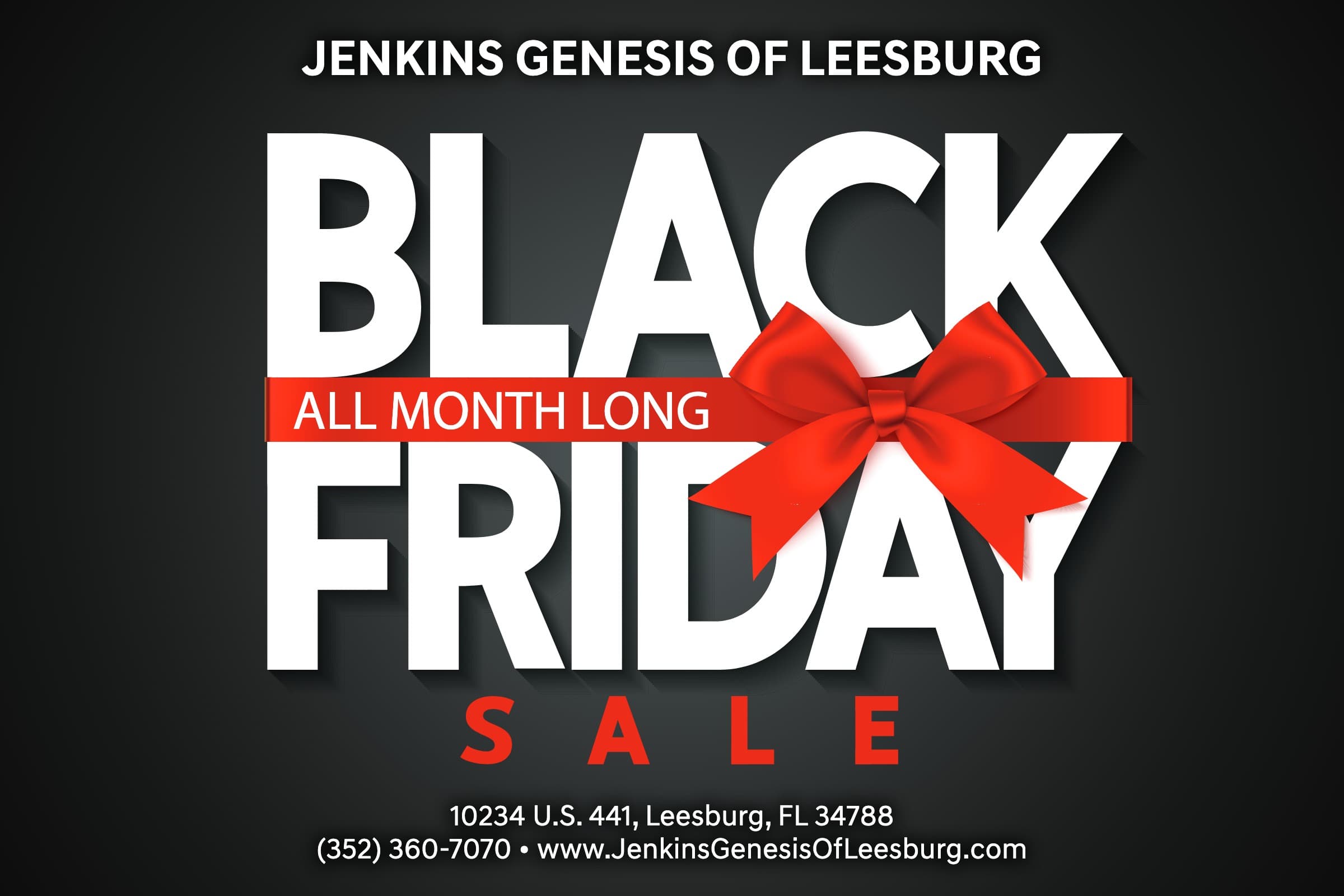
The catch: every store in the market says "Black Friday." The ones that win give a specific person a specific reason to come in this week — their trade-in, their payment, their lease — not just a bigger font on the same sale.
Who to mail
Start with the people who already know you — they respond at a higher rate and cost nothing to find:
- Past buyers in an equity position, matched to a comparable in-stock unit (database & equity mail).
- Lease customers within about a year of maturity.
- Service customers in older vehicles — the RO history says they're loyal to the store already.
- Unsold leads from the last 90 days of showroom and internet traffic.
Then widen the net with conquest mail to in-market households in your primary market area who don't buy or service with you yet. Every list is pulled fresh from the DMS for the drop, so recent buyers are suppressed and nobody gets a trade-in offer on a car they sold last month.
Offers that fit the week
Pick one headline offer and make the creative about it. The ones that hold up best for car sales:
- Black Friday pricing on in-stock units — the classic store-wide event, strongest when it names real inventory.
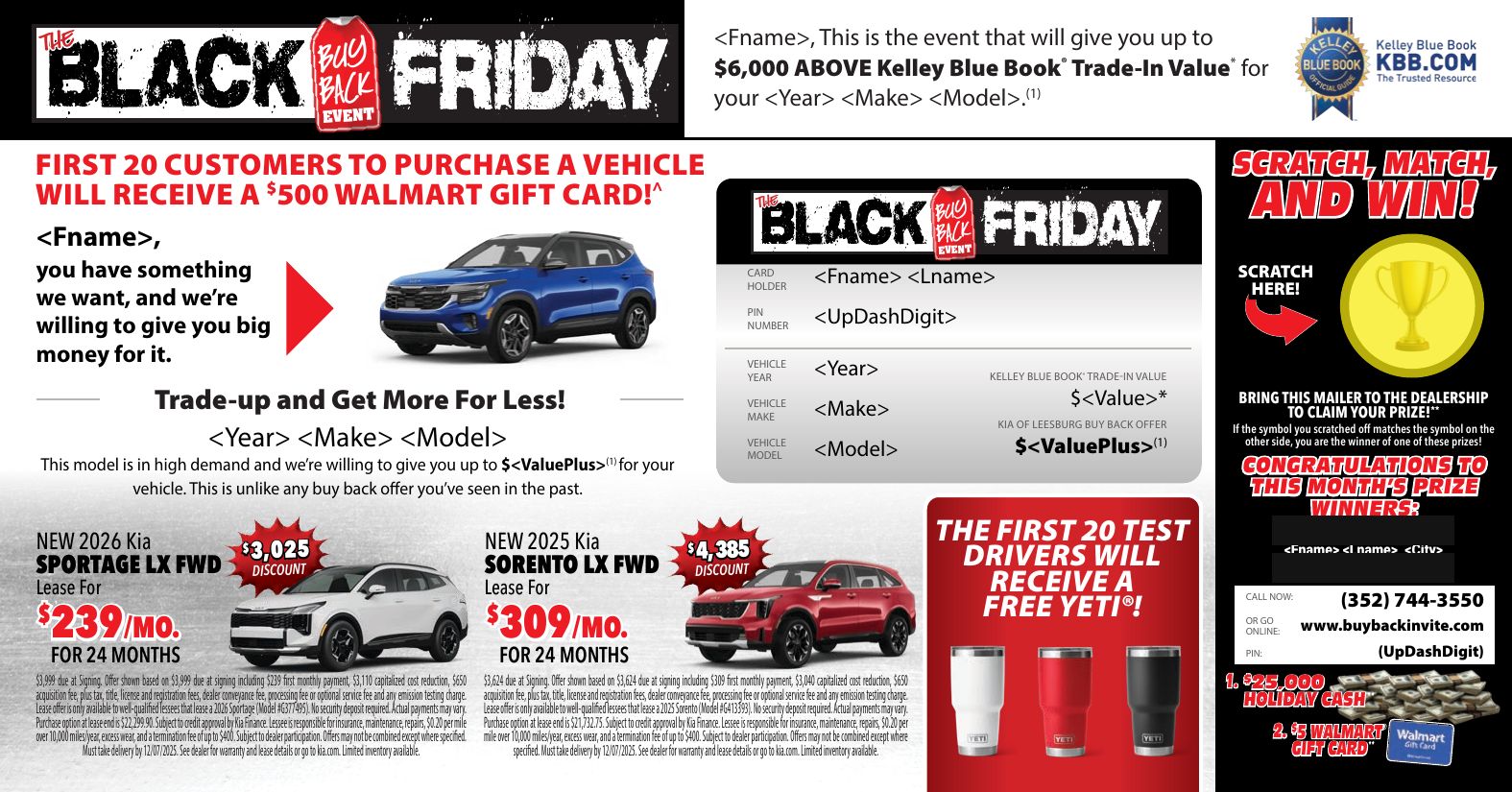
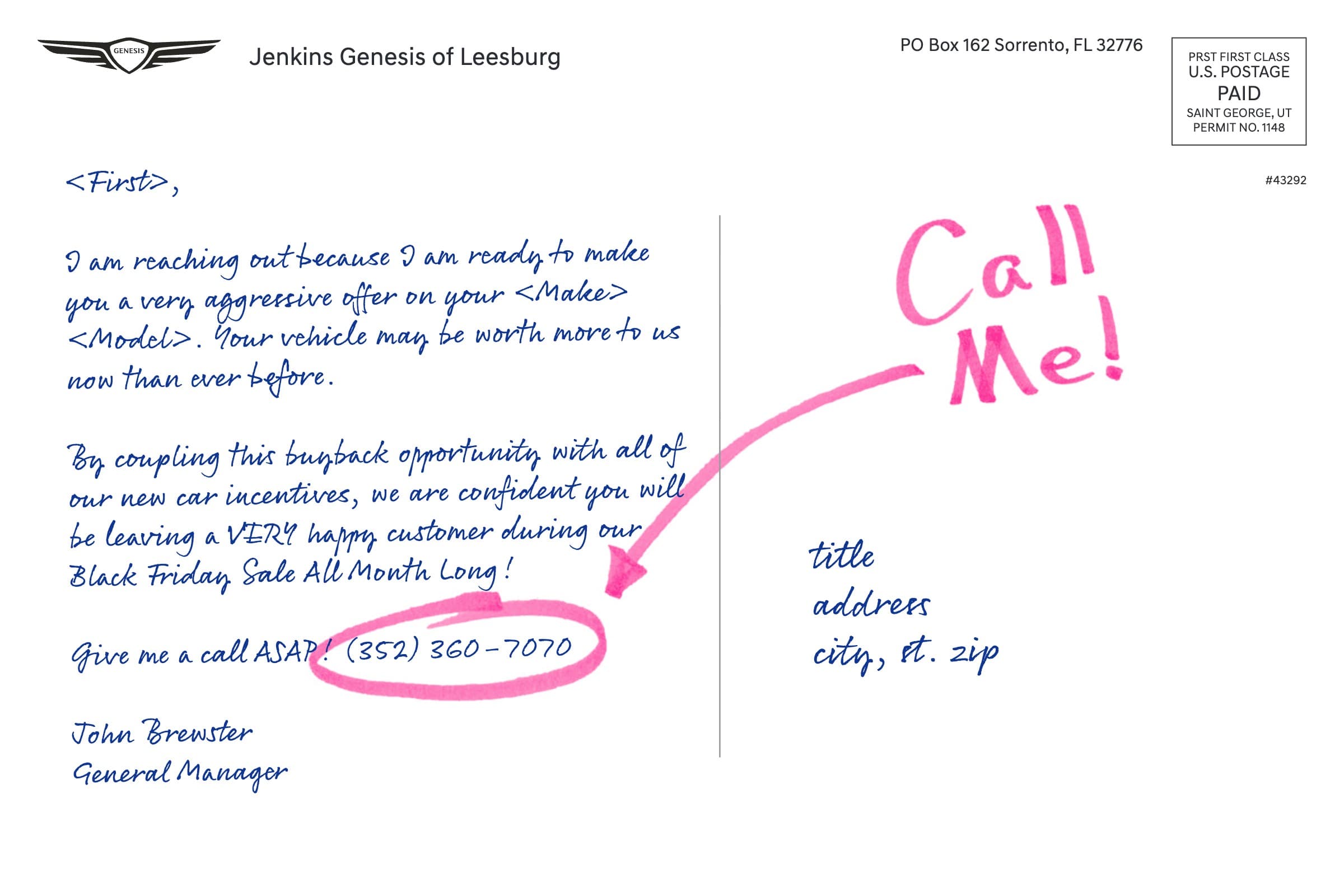
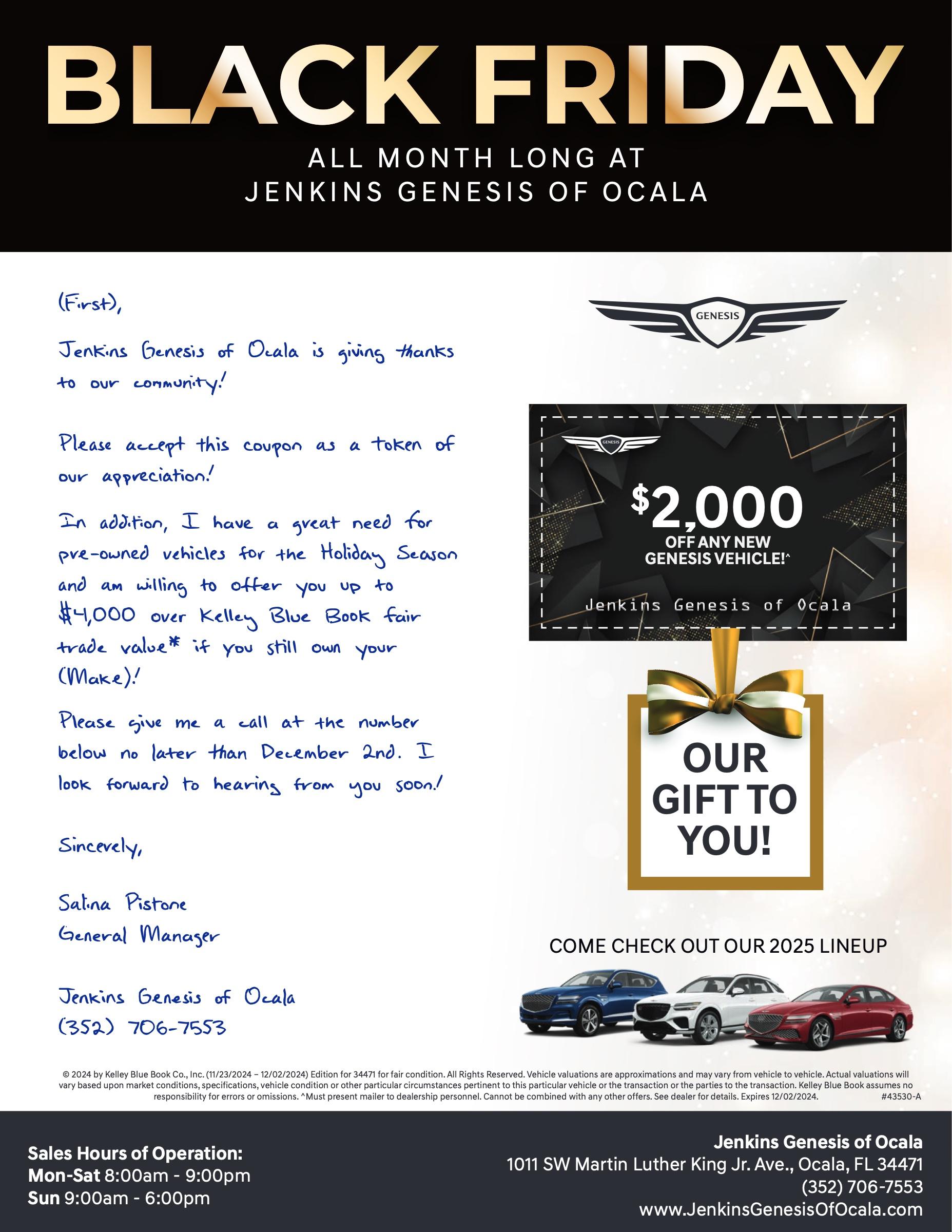
- A trade-in bonus or guaranteed appraisal — the personal hook for database mail: "your 2019 Silverado" beats "top dollar for trades." It's the same mechanics as a buyback campaign, which Xcel has run as a Black Friday Buy Back Event.
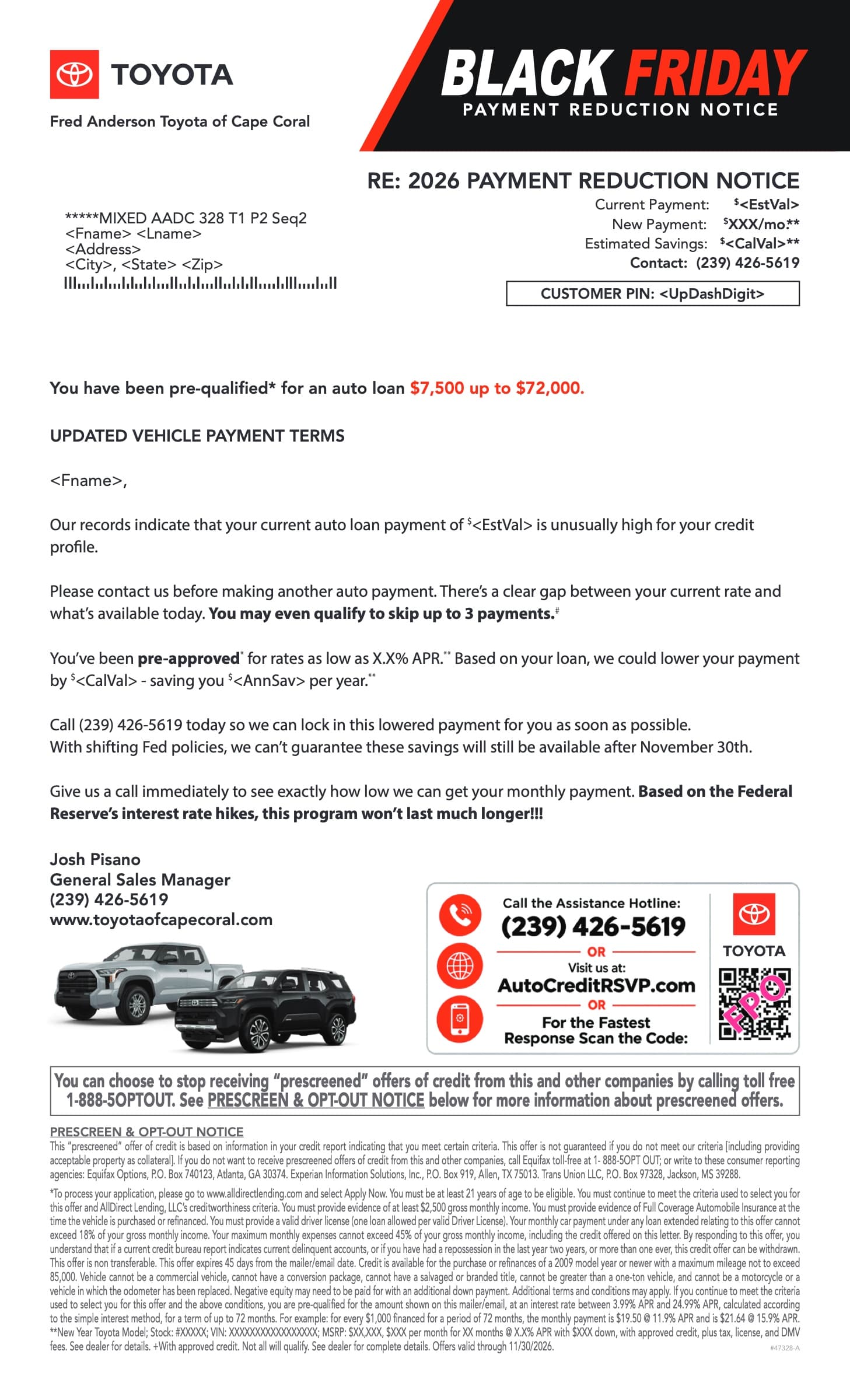
- Payment-led upgrades for equity and lease customers: same or similar payment, newer vehicle.
- A limited doorbuster on a few specific stock units — only if they're real and you'll honor them.
- A service tie-in — a holiday service special on the same piece brings in the customers who aren't shopping yet.
If the creative quotes a payment, down payment, APR or number of payments, federal Truth in Lending (Regulation Z) and Consumer Leasing (Regulation M) rules require the full terms to be disclosed, and state dealer-advertising laws add their own. Manufacturer co-op programs also control how brand marks and incentives appear. Every piece is reviewed against those before it prints.
How the channels work together
Mail does the heavy lifting because it's addressed to a household and sits on the counter all week. The digital channels carry the urgency: email announces the event and the days, Facebook keeps it in front of the same audience all week, and SMS goes out on Friday morning to customers who've opted in to texts from the store (what the TCPA requires). The schedule below is the one we build to.
4 weeks out
Campaign booked: creative approved, offer and inventory locked, co-op pre-approval submitted where the brand requires it.
10–14 days outPostcard
Final list pulled from the DMS (recent buyers suppressed), personalized and sent to print.
Sat – Mon before Thanksgiving weekPostcard
Mail lands in-home — postcard or letter, personalized to the household.
Monday of Thanksgiving weekEmail
Email #1 announces the event and the days. Facebook ads start and run through Sunday.
Thanksgiving DayEmail
Short preview email: doors open tomorrow, here's what's on the lot.
Black Friday morningSMS
Text to opted-in customers, from a real person at the store; email #2 goes out the same morning.
Saturday – SundayFacebook
Last-weekend push on Facebook and a final email; follow-up texts to anyone who replied.
30 / 60 / 90 days after
UpDash matches the mailed list to DMS sales and service — sold units, repair orders, gross.
How you'll know it worked
Each piece carries its own tracked phone number, QR code and personalized URL, so every call, text and scan lands in UpDash with the recording and the lead attached. That's the response you can see.
The bigger number is the one you can't: most buyers never mention the mailer. After the event, UpDash matches the entire mailed list against your DMS sales and service records — one VIN, one date, every deal counted once — so you see the sold units and repair orders that came from mailed households whether or not they called the number. How DMS matchback works.
Last year's piece
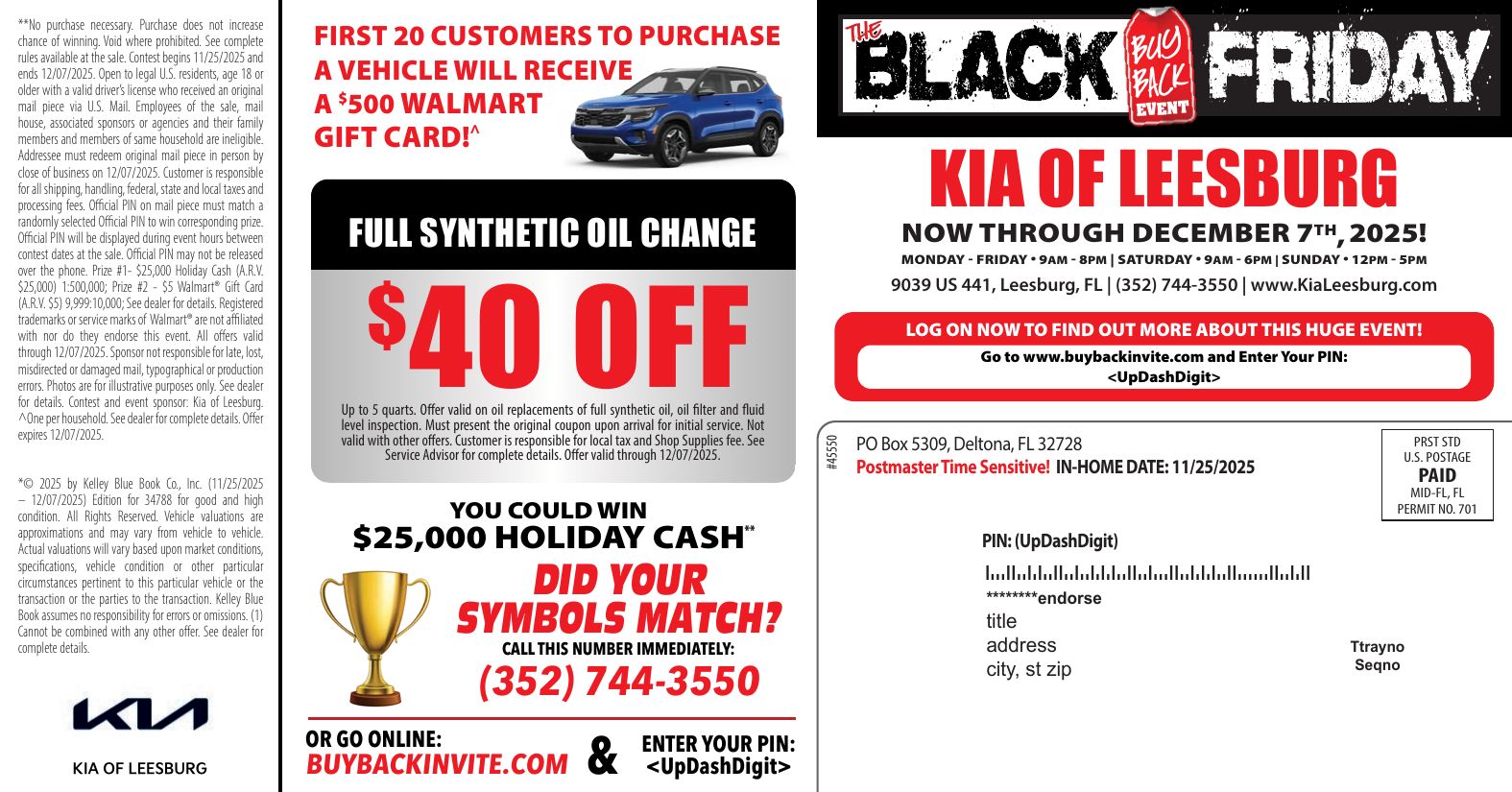
Xcel's 2025 Black Friday piece was a buyback event: a die-cut postcard for Kia of Leesburg offering up to $6,000 above Kelley Blue Book trade-in value for the customer's own vehicle, two lease specials, a scratch-and-match game, a gift card for the first 20 buyers and a service coupon, with the sale running through December 7. It landed November 25 and drew 112 responses and 17 appointments from 10,000 pieces. The store had no DMS feed connected, so sold units couldn't be matched. Prize games carry their own rules — no purchase necessary, odds and prize disclosures — and on the piece shown here the prize-winner names are blacked out.
Frequently asked questions
When should a dealership's Black Friday mailer arrive?
In-home on the Saturday through Monday before Thanksgiving week, so it's in the house while families plan the week and before holiday mail volume peaks. That means the list is pulled and the piece goes to print 10 to 14 days ahead, and the campaign is booked — offer locked, creative approved — about four weeks out.
Should Black Friday mail go to our customer database or to conquest households?
Both, database first. Past buyers in equity, lease customers near maturity, service customers in older vehicles and recent unsold leads respond at a higher rate than cold households. Conquest mail to in-market households in your market area adds volume on top of that.
Can we use manufacturer co-op funds for a Black Friday campaign?
Often, as long as the creative follows the brand's co-op guidelines and is pre-approved where the program requires it. Program terms belong to the manufacturer and change. Xcel handles the co-op process end to end for Ford and Kia dealers — see the manufacturer pages for how each program works.
How do we know if a Black Friday campaign actually sold cars?
Tracked response (calls, texts, QR scans and PURL visits) shows who raised a hand. DMS matchback shows who bought: after the event the full mailed list is matched against your sales and service records, so you count the sold units and repair orders from mailed households even when the buyer never mentioned the piece.
Running around the same time
By Xcel Media Group · · Plain-text version