
Why it works
Most mail asks the customer to buy something. This one asks to buy something from them — their own vehicle, named on the piece. That flips the conversation:
- It's personal. The year, make and model come straight from the dealership's sales and service records, so the piece is about their car, not a car.
- It fills the used lot. Late-model, in-demand units are the hardest inventory to source at auction. Buying them from your own customers is cheaper and they come with a service history you already know.
- The trade turns into a sale. An owner who sells you their vehicle still needs one. Plenty of locator appointments end on the showroom floor — which is why the sold units and repair orders below are so strong for a campaign that never mentions a sale price.
Who gets it
The list is built from the DMS for the vehicles the store actually wants: late-model units in high demand, owners in a likely equity position, and service customers whose vehicle the used department would take today. Recent buyers are suppressed, and every piece carries a personal PIN so a response ties back to the household. Half of the 2026 runs paired the mail with a text follow-up to customers who had opted in (what the TCPA requires).
The formats
Three formats carry the same request, and stores rotate them so the piece never looks like the last one:
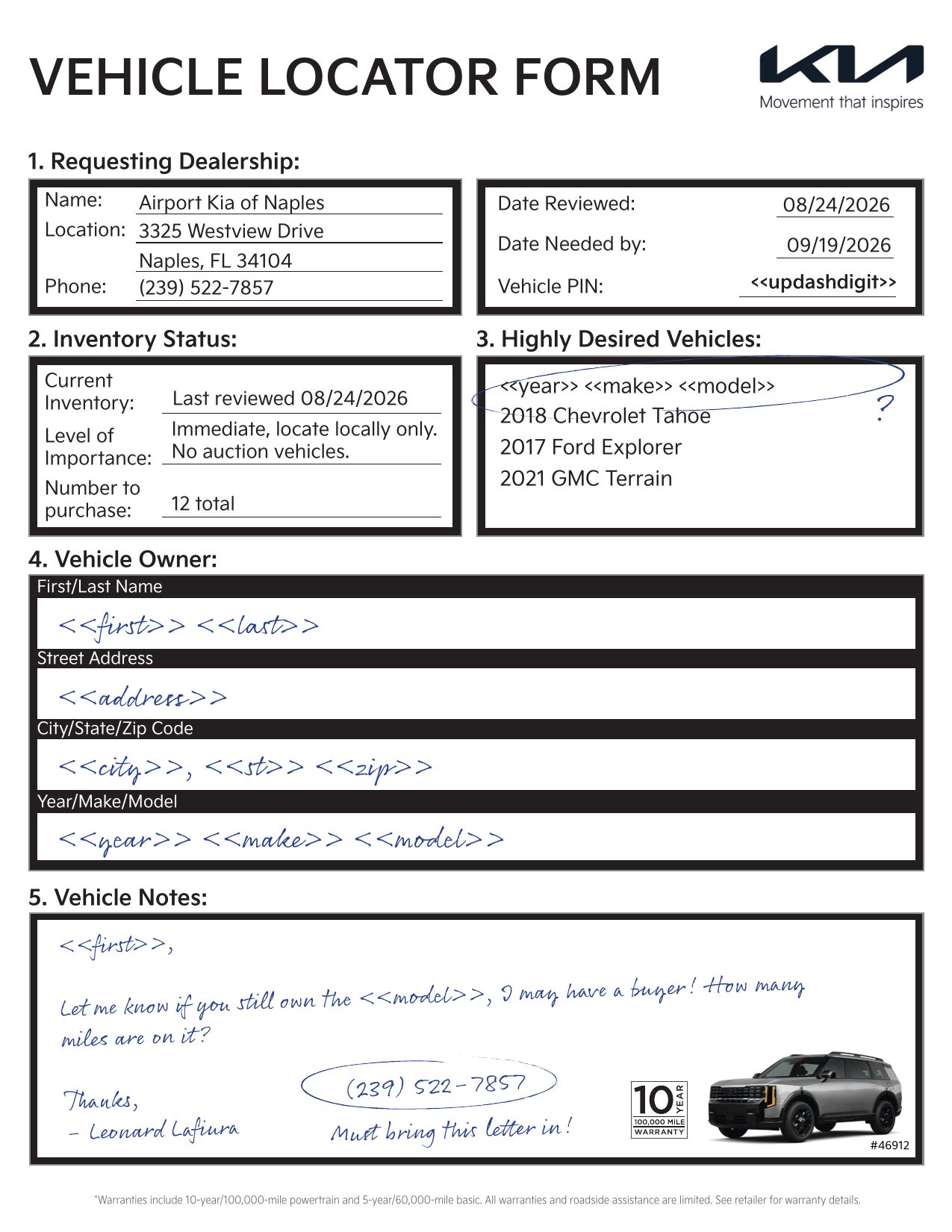
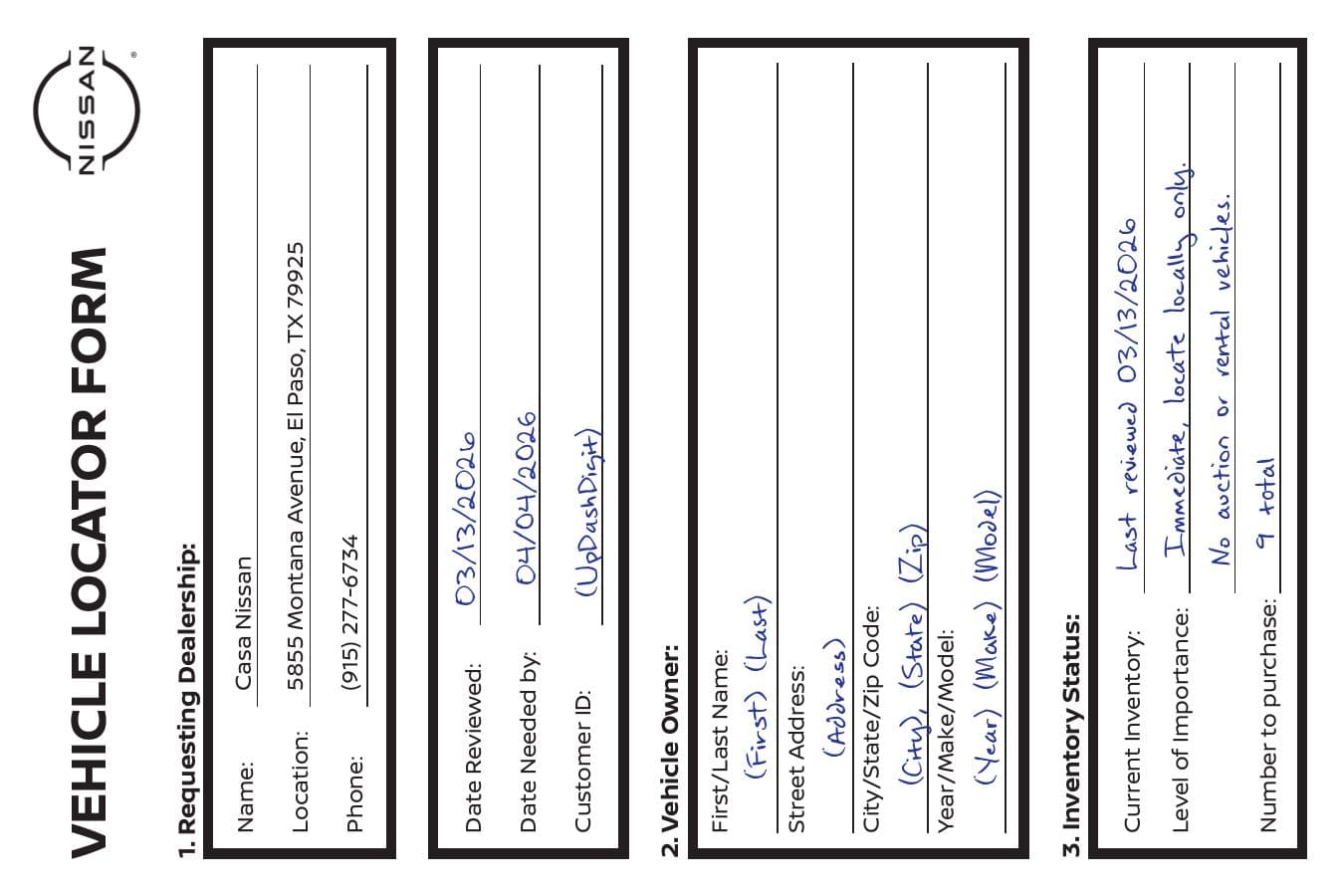
- The locator form — an official-looking form with the requesting dealership, the owner and the vehicle filled in, and an inventory status that says why the store needs it.
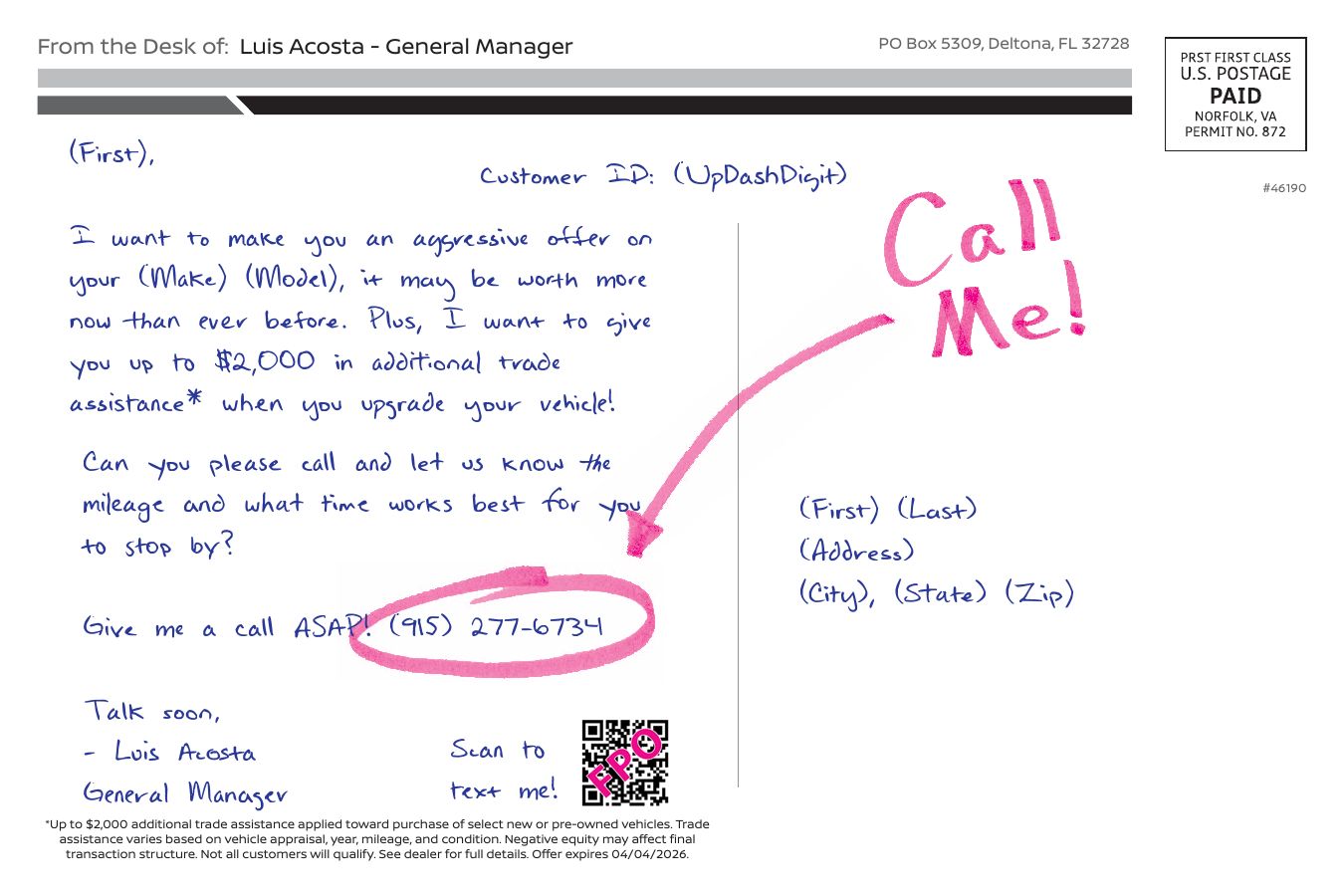
- The From the Desk card — the locator form on one side, and on the other a handwritten note from the general manager asking about the owner's vehicle, with the phone number circled.
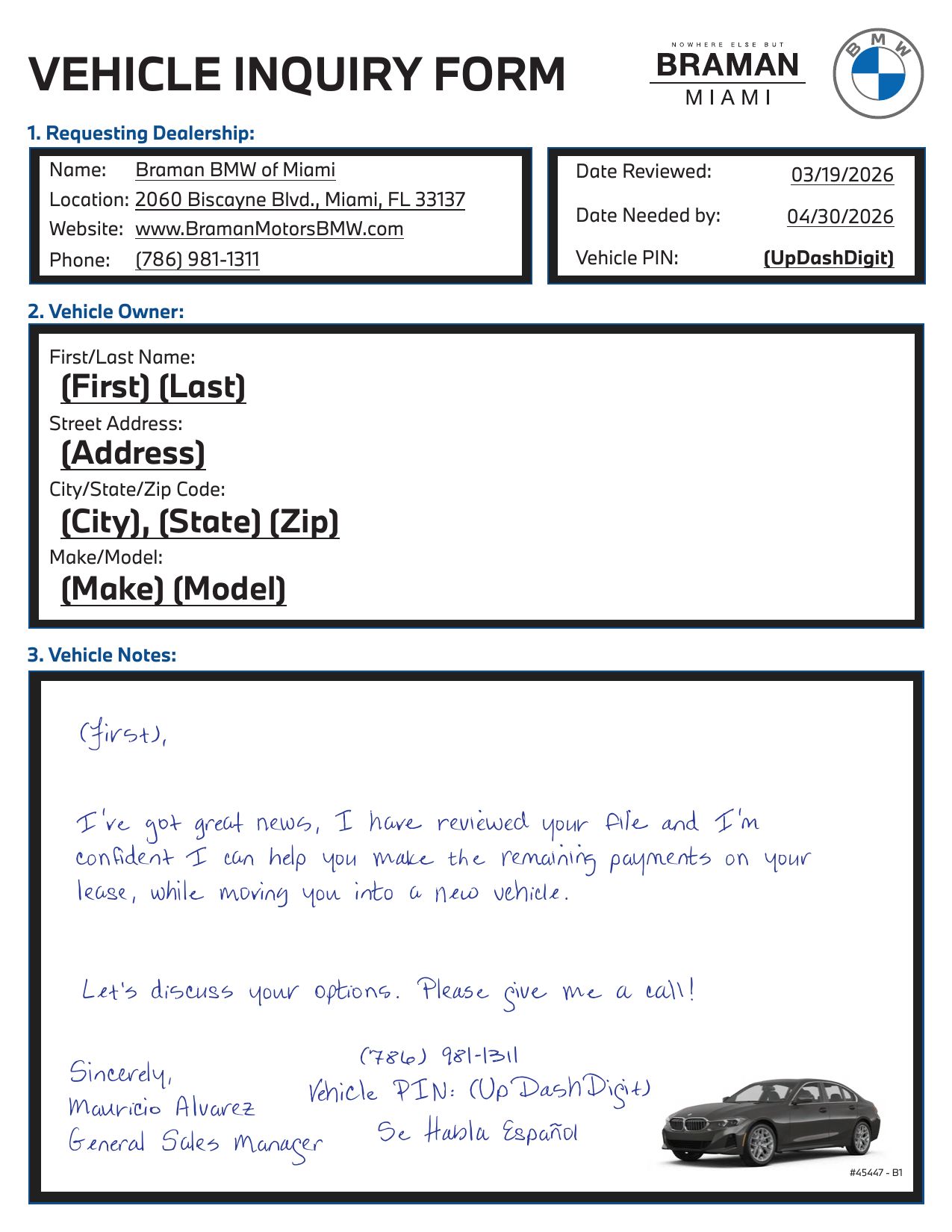
- The inquiry form — the same request with a pen-signed note from the sales manager in the notes box, written in handwriting that's printed by pen, not font.
Every claim on the piece is one the store will stand behind — if it says the store needs the vehicle, the used department really does.
How the channels work together
Mail does the asking because it's addressed to a household and names the vehicle. Text follows a few days after it lands, to customers who've opted in, and works the replies. Every call, text and scan is tracked in UpDash, and the whole mailed list is matched to your DMS afterwards — that's where the sold units and repair orders below come from.
2 weeks outLetter
Used department names the vehicles it wants; list pulled from the DMS against that wish list, recent buyers suppressed.
10 days outLetter
Pieces personalized — owner, vehicle, PIN — and sent to print.
In-homeLetter
The From the Desk card, locator form or inquiry form lands.
3 – 5 days afterSMS
Text follow-up to opted-in owners; replies worked by the store's team.
30 / 60 / 90 days
UpDash matches the mailed list to DMS sales and service: sold units, trades, repair orders.
Frequently asked questions
What is a vehicle locator mailer?
A mail piece that asks the owner of a specific vehicle — named by year, make and model from the dealership's records — to sell it to the store. It's built to look like a request from the used department, often as a locator form or a handwritten note, rather than a sales flyer.
Is a vehicle locator campaign a sales campaign or an acquisition campaign?
Both. It's written to buy used inventory, but an owner who sells their vehicle still needs one, so many appointments end in a new sale. The 2026 numbers above count both: DMS-matched sold units and the repair orders from the same households.
How is it different from a buyback campaign?
A locator campaign asks for one specific vehicle because the store needs it. A buyback campaign offers to buy the customer's vehicle at a premium, usually with an upgrade path. Stores often alternate the two so the same customers see a fresh angle.
Who should a vehicle locator campaign go to?
Owners of the late-model, in-demand vehicles your used department wants, pulled from your own sales and service records — usually customers in a likely equity position, with recent buyers suppressed.
By Xcel Media Group · · Plain-text version