
Why it works
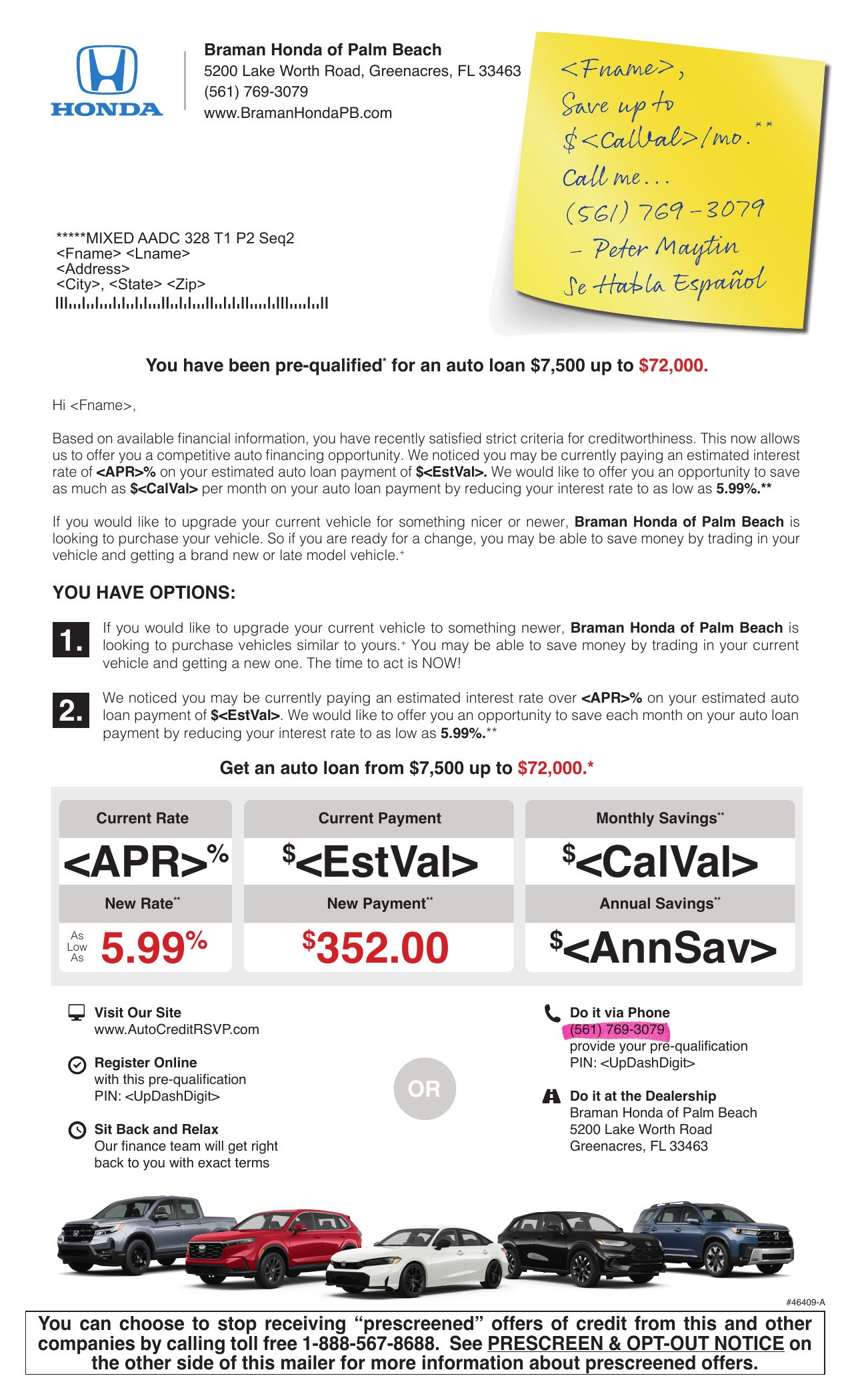
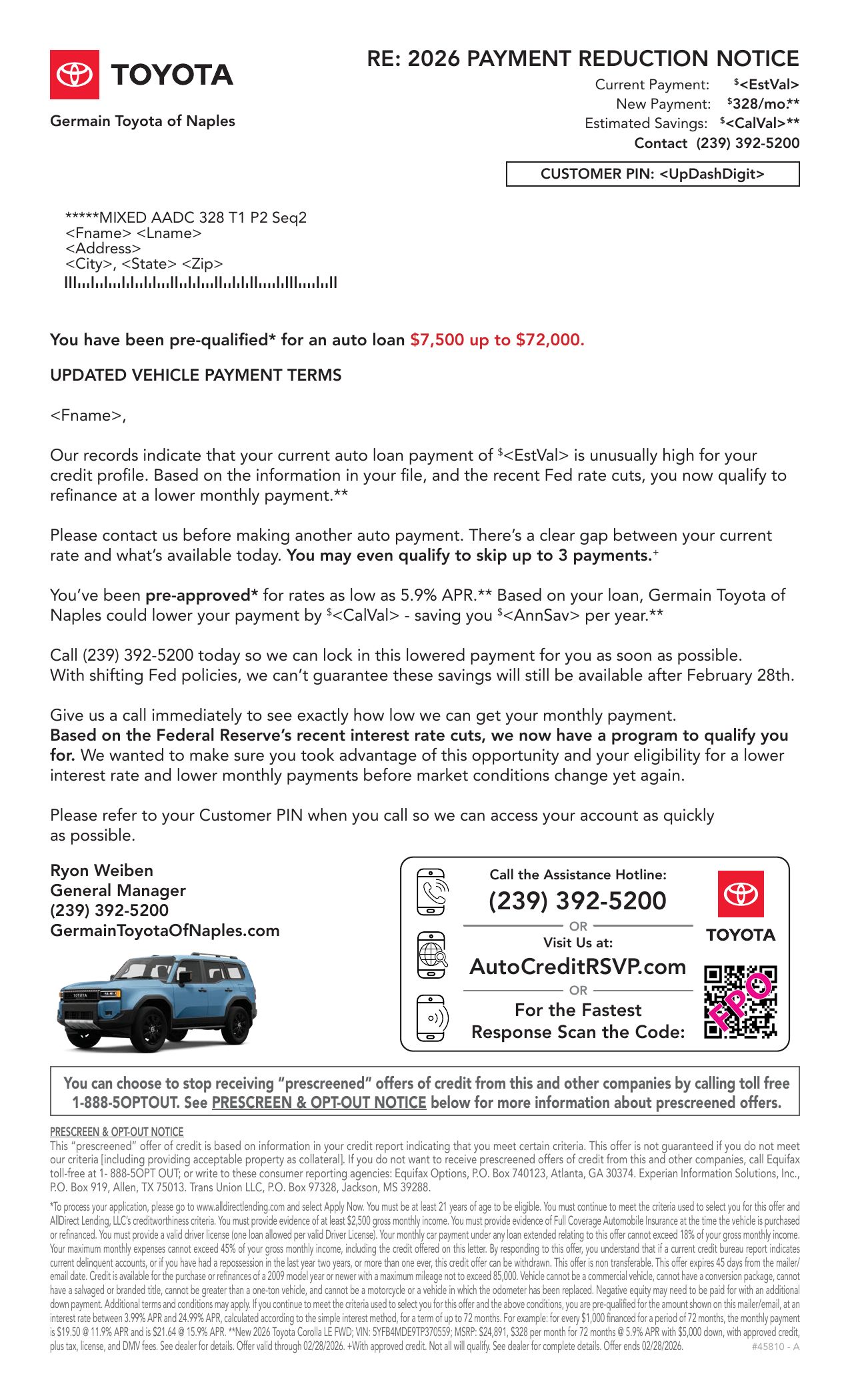
Nobody throws away a letter about their own monthly payment. The piece is built around three numbers — what they pay now, what they could pay, and the difference — and a customer PIN that ties the response back to the household. That's why it pulls response:
- It's about money they already spend, not a car they haven't chosen.
- It looks official — a dated notice with a reference number, not a glossy sale piece.
- It opens the door to an upgrade — a lower or similar payment on a newer vehicle is often the answer.
3 weeks outLetter
Prescreen criteria set and the list pulled; firm-offer terms and disclosures written.
10 days outLetter
Each notice personalized with current payment, estimated payment and PIN, then printed.
In-homeLetter
The payment reduction notice lands.
Same weekSMS
Text follow-up to opted-in customers; calls and texts worked as they come in.
30 / 60 / 90 days
UpDash matches the mailed list to DMS sales and service.
Who gets it — and the rules that come with it
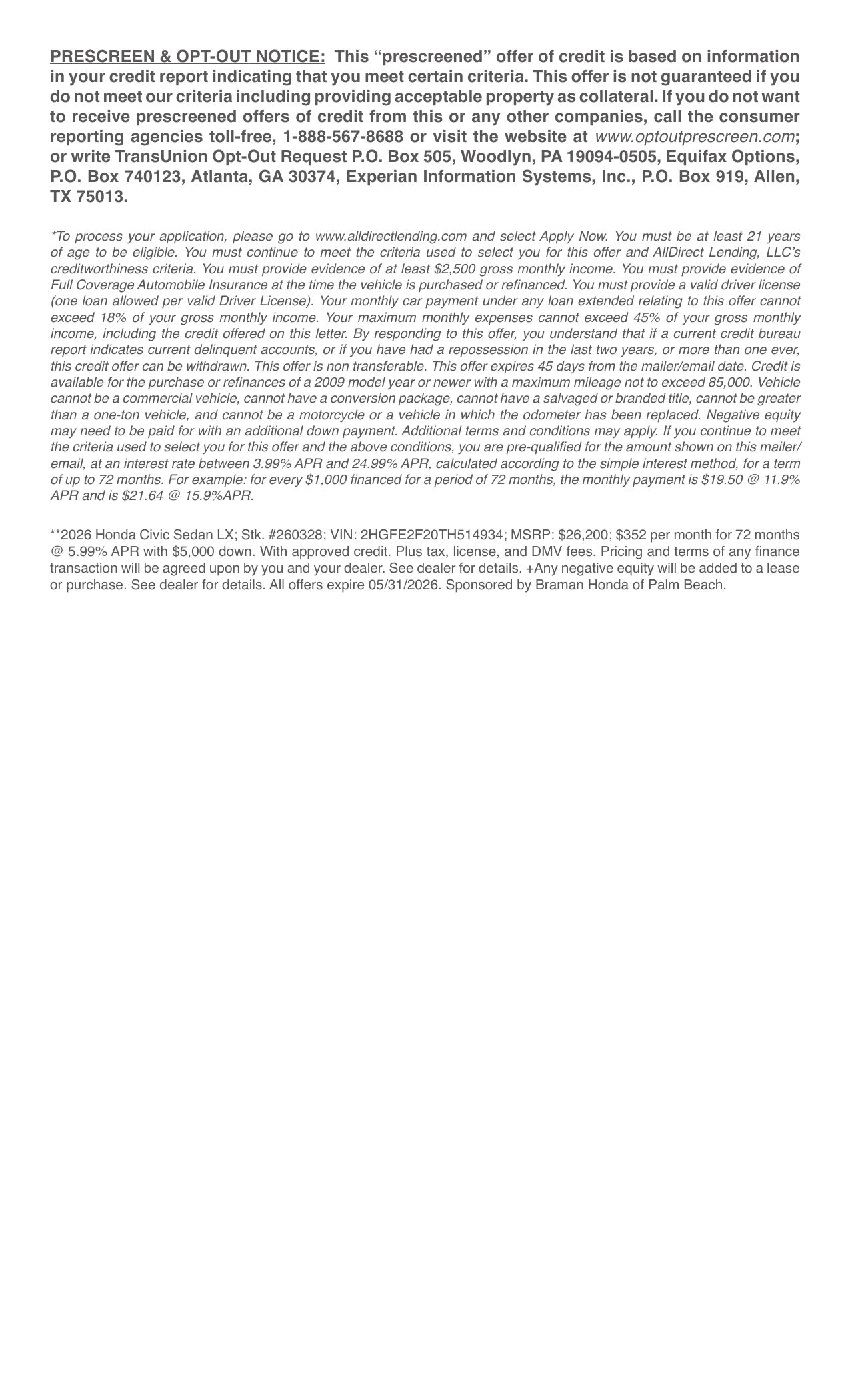
Payment reduction lists are usually built from credit-bureau data — consumers whose current auto loan looks high for their credit profile. Because that's a prescreened offer of credit, the piece has to be a firm offer and carry the federal opt-out notice required by the Fair Credit Reporting Act (how prescreened credit mail works). Any payment, rate or term on the piece also triggers Truth in Lending disclosures. Every notice is reviewed against those rules before it prints. Stores can also run it to their own DMS customers.
Be ready for the response
This campaign makes phones ring, so it works best when the store is staffed for it. Half of the 2026 runs added text follow-up to customers who had opted in, and every call and text lands in UpDash with the recording attached, so nothing slips. The sold-unit rate per thousand pieces is lower than the equity campaigns — the win is in how many qualified conversations it starts.
Frequently asked questions
What is a payment reduction mailer?
A notice to a consumer whose current auto payment looks high, showing their current payment, an estimated lower payment and the estimated savings, with a personal code to respond. It's designed to read like an account notice rather than an advertisement.
Is a payment reduction mailer legal?
Yes, when it's done right. If the list comes from credit-bureau data, the piece must be a firm offer of credit and include the FCRA prescreen opt-out notice, and any payment or rate shown triggers Truth in Lending disclosures. State advertising rules apply too.
Why does a payment reduction campaign get so many responses?
Because it's about money the customer already spends every month, and it gives them a specific number. That's why the store should be staffed to work the calls and texts the week it lands.
By Xcel Media Group · · Plain-text version